

Agriculture has always been one of the world’s most essential industries, providing the food, fibre, and resources required to support growing populations and evolving economies. Today, however, the factors influencing agricultural investment are becoming increasingly complex, shaped by changing demographics, technological innovation, environmental considerations, and global supply chain priorities.
Understanding these trends is becoming increasingly important for landowners, agricultural enterprises, project stakeholders, and regional development initiatives seeking to position themselves for long-term success.
Population Growth and Food Security
Global population growth continues to place increasing demand on agricultural production systems. As populations expand and standards of living improve across many regions, demand for food production is expected to remain a long-term driver of agricultural activity.
This growing demand places greater importance on productive agricultural land, efficient farming practices, reliable water resources, and infrastructure capable of supporting sustainable production.
For many regions, the challenge is no longer simply increasing production, but doing so in a manner that balances economic outcomes with environmental stewardship and long-term land productivity.
Water as a Strategic Resource
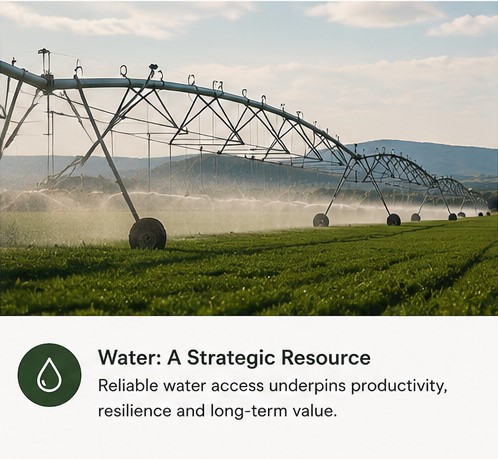 Water availability has become one of the most significant factors influencing agricultural development and investment decisions.
Reliable access to water supports productivity, resilience, and long-term planning. As climate patterns evolve and demand for water resources increases, irrigation systems, water storage infrastructure, and efficient water management practices are becoming increasingly important components of agricultural development.
Infrastructure Supporting Growth
Projects that incorporate sustainable water management strategies are often better positioned to support long-term productivity and economic value.
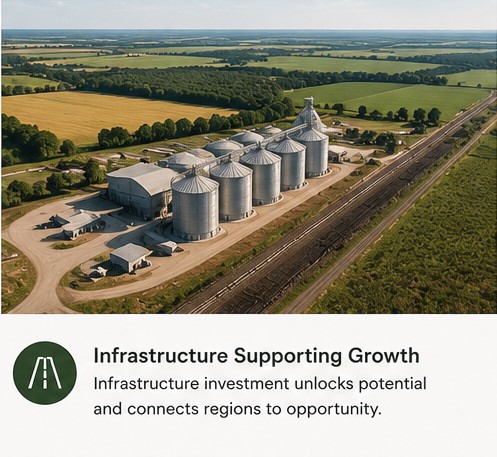 Agricultural productivity relies on more than land alone. Transport networks, irrigation infrastructure, energy supply, storage facilities, and supporting services all contribute to the viability and competitiveness of agricultural regions.
Investment in infrastructure can unlock new opportunities by improving access to markets, reducing operational constraints, and supporting regional economic development.
For stakeholders assessing agricultural opportunities, infrastructure considerations often play a significant role in determining long-term project potential.
Technology and Innovation
Advancements in technology continue to influence the way agricultural assets are managed and developed.
Data-driven decision-making, remote monitoring, precision agriculture, water management technologies, and improved operational systems are creating opportunities to enhance productivity while supporting more efficient resource utilisation.
Technology is increasingly becoming an important consideration in evaluating agricultural projects, particularly where long-term productivity and sustainability objectives are priorities.
Sustainability and Stewardship
 Environmental considerations are playing an increasingly important role in agricultural planning and development.
Landowners, businesses, and project stakeholders are recognising the value of responsible land stewardship practices that support productivity while protecting natural resources for future generations.
Sustainability is no longer viewed solely as an environmental objective. Increasingly, it is recognised as an important component of long-term asset performance, risk management, and regional resilience.
Looking Forward
The agricultural sector continues to evolve in response to global economic, environmental, and demographic changes. While individual markets and regions may experience different challenges and opportunities, several themes remain consistent: food security, water management, infrastructure development, innovation, and responsible land stewardship.
For stakeholders involved in agricultural land, rural development, and related infrastructure projects, understanding these trends provides valuable context for evaluating opportunities and supporting long-term decision-making.
At Victoria Regent Capital, we believe that successful agricultural development is built upon a clear understanding of both current realities and emerging opportunities. Strategic planning, informed decision-making, and long-term thinking remain essential foundations for sustainable growth and regional prosperity.